
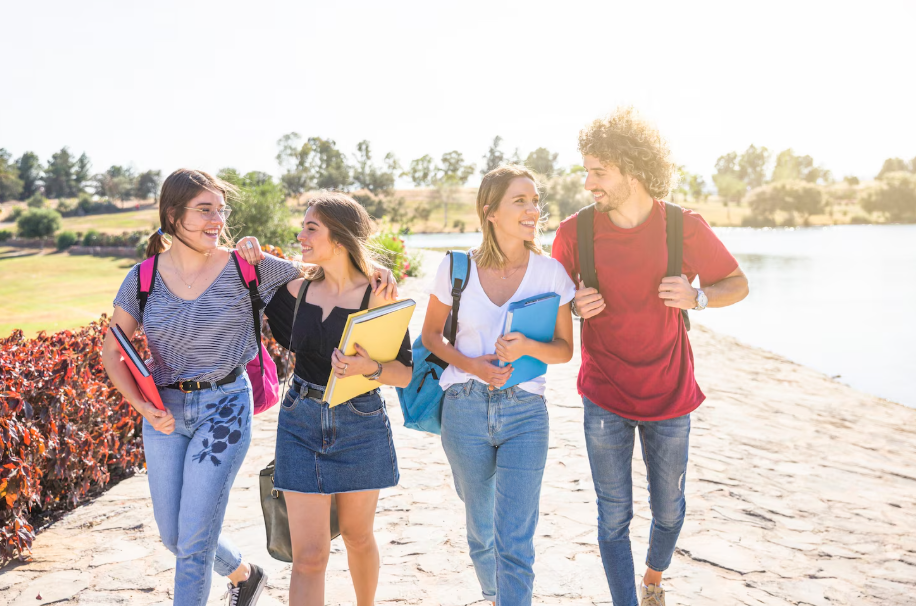
There’s something approximately being 15 or 16 inside the summer season that feels electric powered. college is out. the world feels bigger. And for the first time, you begin thinking who you’re past your school room, your neighborhood, your typical circle of friends.
That’s where in summer a look at journeys are available.
For teens aged 14 to 18, those trips are some distance extra than a wreck from recurring. They’re a doorway into independence, self belief, and actual-world appreciation. At a stage of lifestyles in which identity is still forming, stepping into a new use of a tradition, or academic environment can quietly reshape the entirety.
Permit’s talk approximately why these reports remember a lot — and why young people journey and cultural studying may be one of the most powerful investments a own family makes in the course of the teenage years.
Why the Ages 14–18 Are So Important
Between 14 and 18 Ages, something shifts. Teenagers start with ideas severely. They question things. They form stronger opinions. They imagine their future careers.
This is also when confidence can either grow — or shrink.
A summer study trip meets them right at that turning point.
While a 15-yr-old navigates a new city, orders meals in some other language, collaborates with worldwide classmates, or offers a task in front of peers from around the world, something clicks. They realize they’re successful. now not in idea — but in exercise.
That sense of capability sticks.
More Than Tourism: The Power of Youth Travel and Cultural Learning
It’s clean to think of global journeys as sightseeing adventures. And yes, there are landmarks and photos and fun days exploring new locations.
However, adolescent tours and cultural studying go deeper than that.
I truly believe youth travel and cultural learning becomes real the moment a teenager finds themselves sitting in a lecture room in Spain, discussing climate change with students from Italy, Japan, and Brazil. Or running on a robotics assignment in a United kingdom summer camp along with young adults who technique issues completely differently than you do.
Perspectives widen.
Young adults begin to apprehend that there isn’t simply one “proper” way to think, analyze, or stay. They grow to be more adaptable. extra empathetic. more open-minded.
And in today’s world, those characteristics are counted simply as an awful lot as grades.
Academic Growth Without the Pressure
One beautiful thing about summer study programs is that they feel different from regular school.
There’s structure, yes. There are workshops, language classes, science labs, art programs, leadership sessions. But the atmosphere is lighter. Curious. Collaborative.
Students often feel freer to ask questions. To experiment. To try something outside their comfort zone.
Some programs focus on:
- Language immersion
- STEM and coding
- Creative arts
- Environmental studies
- Management and entrepreneurship
- Pre-university instruction
And because it’s summer, the learning feels voluntary — not forced. That subtle shift changes motivation entirely.
Building Real Independence
Mother and father often fear about sending their young adults overseas. That’s herbal. That’s natural. But carefully organized summer study trips are designed with supervision, safety, and structure in mind.
Within that safe structure, teens learn independence step by step.
They manage their time. They keep track of their belongings. They communicate across cultural differences. They solve small daily challenges without immediately turning to a parent.
Those small moments construct resilience.
By the time they go back home, many dad and mom notice something sudden: their infant contains themselves in another way. a little taller. a touch extra confident.
Friendships That Stretch Across Borders
There’s a unique kind of friendship that paperwork when young people journey together.
Shared stories boost up connection. Exploring a city collectively, getting slightly lost and figuring it out, giggling over cultural misunderstandings — these moments bond humans quickly.
For teens elderly 14 to 18, those friendships can be transformative. They begin to see themselves as a part of a international community, no longer just a nearby one.
And in an increasing number of related international, having pals throughout international locations broadens horizons in ways that social media on my own in no way may want to.
Cultural Awareness That Can’t Be Taught in a Classroom
Studying another way of life in a textbook is one element.
Dwelling internal it — even briefly — is another.
Tasting nearby food. hearing extraordinary accents. watching daily customs. collaborating in festivals. touring historical websites with a neighborhood manual who explains no longer just data, however feelings.
This is in which youngsters journey and cultural gaining knowledge leave a lasting imprint.
Teens start to recognize nuance. They discover ways to pay attention more carefully. They recognize stereotypes and venture into them. They broaden appreciation for variations — not because someone informed them to, but because they’ve skilled it firsthand.
That form of consciousness shapes better leaders, better collaborators, and albeit, better people.
Strengthening University Applications
Let’s be honest — families often ask: will this help with university admissions?
The answer is yes, but now not in a shallow method.
Admissions officials search for college students who exhibit initiative, curiosity, and worldwide consciousness. A properly-selected summer observe ride shows:
- Willingness to step outside comfort zones
- publicity to various views
- commitment to educational or personal boom
- Adaptability in unexpected environments
Whilst a scholar writes about imparting research abroad, volunteering in a community task, or participating in pass-cultural debates, it adds intensity to their tale.
And depth stands out.
Discovering Passions Early
A 16-year-old would possibly assume they need to look at medicinal drugs — till they attend a summer season biomedical lab program and comprehend they’re surely interested in research, not scientific work.
Any other might be a part of a sustainability-focused journey and discover a ardour for environmental coverage.
Summer applications create low-stress environments to explore pastimes earlier than making long-time period educational selections. That readability can save years of uncertainty later.
Confidence That Carries Into Adult Life
Self assurance built through actual studies doesn’t fade easily.
A teen who has navigated airports, managed organization initiatives with global peers, and tailored to new cultural norms develops a quiet inner trust: “i can take care of surprising situations.”
That faith becomes notably valuable at college, in job interviews, and eventually in expert environments.
It’s not about becoming fearless. It’s about knowing you can figure things out.
Choosing the Right Summer Study Trip
Not all programs are the same. Families should consider:
- Accreditation and safety standards
- Clear learning objectives
- Age-suitable supervision
- Cultural immersion opportunities
- Balanced agenda (getting to know + exploration)
- Transparent communication
It’s additionally important to involve the teen in the selection. After they feel possession over the choice, their engagement skyrockets.
A Summer That Changes Perspective
Some summers blur together.
Others become reference points — “That was the summer I realized I loved engineering,” or “That was when I understood how big the world really is.”
For young people aged 14 to 18, summer study trips offer more than travel. They offer perspective. Growth. Courage.
In a world that increasingly values global thinking and adaptability, youth travel and cultural learning are not luxuries. They’re formative experiences.
And years later, while those teens’ appearance returned, they regularly don’t take into account the precise lecture room training.
They remember the conversations. The challenges. The moment they felt independent for the first time.
Sometimes, that’s exactly what growing up needs.
Conclusion
Summer time observation trips offer more than instructional enrichment; they shape character, self assurance, and worldwide awareness at a crucial stage of life. through children tour and Cultural getting to know, teenagers advantage independence, empathy, and real-global attitude that lecture rooms alone cannot provide. These stories spark interest, beef up college profiles, and construct lasting resilience. For younger people elderly 14 to 18, an unmarried summer overseas can quietly affect the route of their future.

